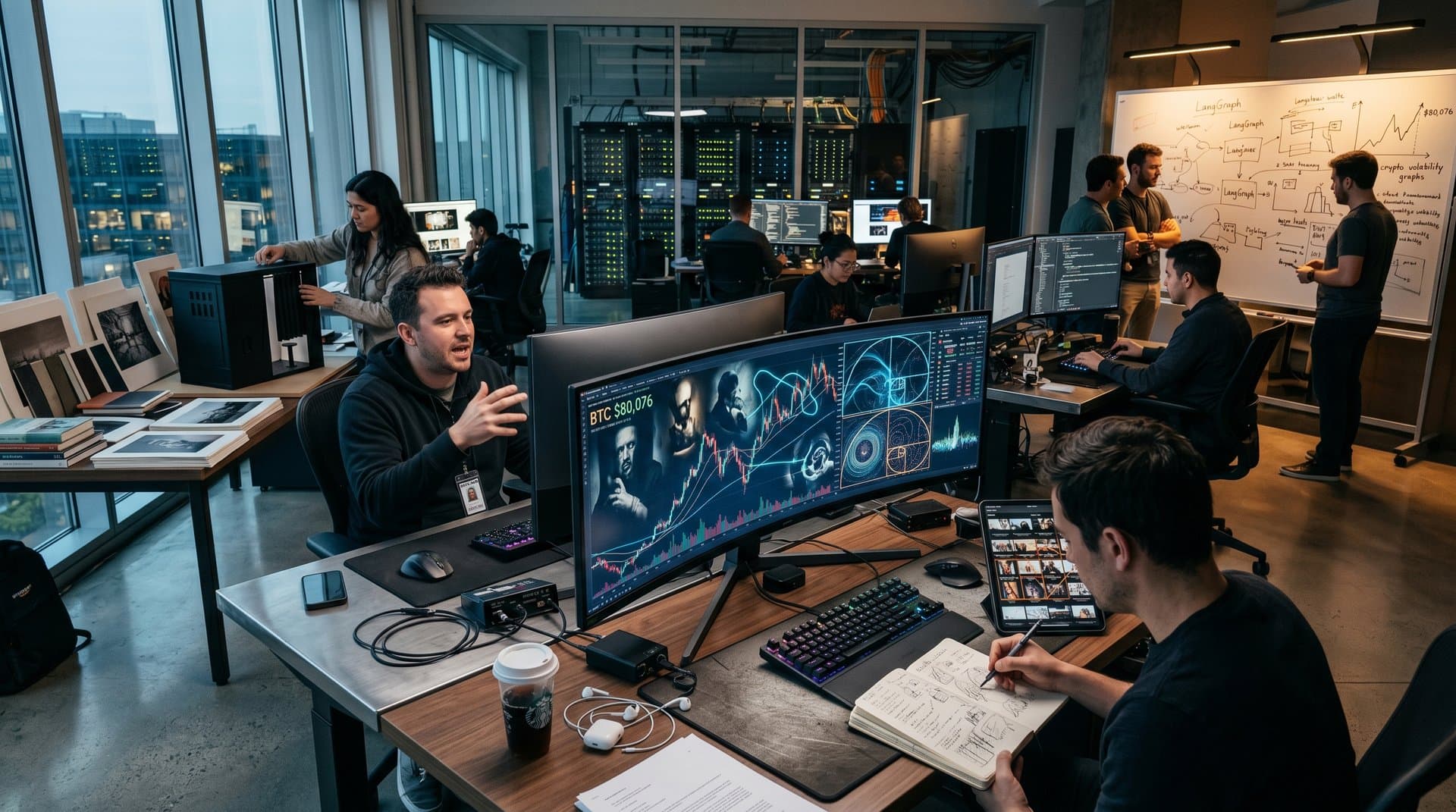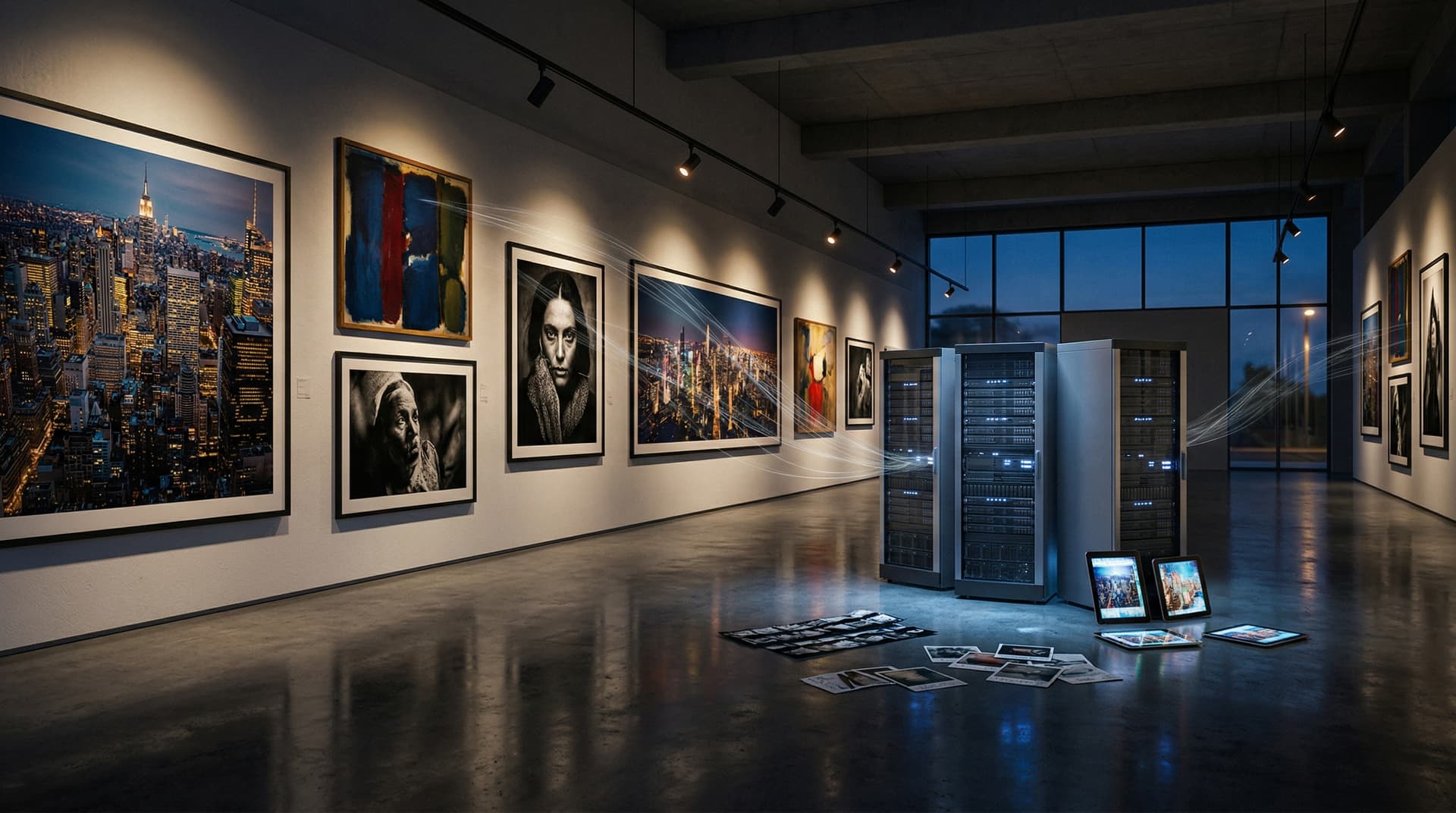
The Guardian labels AI data scraping history's greatest art heist on April 12, 2026. Visual artists lose licensing revenues as generative models train on billions of unlicensed images from portfolios and galleries.
Mechanics of AI Data Scraping
AI firms scrape public websites without consent. They compile massive datasets like LAION 5B, which holds 5.85 billion image-text pairs, to train models including Stable Diffusion and Midjourney, according to LAION-AI.org data.
Photographers' C-prints and painters' oil on canvas works enter these datasets. Outputs replicate precise formal elements: the volumetric lighting in Thomas Struth's museum interiors or the cropped compositions of Martin Parr's street scenes. Archival pigment prints and silver gelatin darkroom exposures lose market scarcity as AI floods stock platforms.
Generative models excel at color grading, mimicking the duotone contrasts in Ellen von Unwerth's fashion editorials. This saturation devalues original editioned works.
Quantified Revenue Declines
Adobe Stock reports a 22% drop in licensing sales during Q1 2026, cited in their April 12 earnings call. The broader visual arts sector sees revenues fall by $450 million USD year-over-year, per Art Basel and UBS Global Art Market Report released April 12, 2026.
Sotheby's auction results from 2025 show AI-influenced hybrid works selling 15% below comparable originals, according to Artnet Analytics on April 12, 2026. Christie's contemporary photography sales dip 18% for mid-career artists like Cindy Sherman, whose dye-destruction prints face direct AI competition.
A Visual Artists Guild survey released April 12, 2026, reveals 68% of independent photographers experience income declines exceeding 30%. Stock agencies like Shutterstock note 25% fewer downloads for traditional illustration categories.
Escalating Legal Countermeasures
Getty Images secures $50 million USD in interim damages against Stability AI, as filed in U.S. District Court by April 12, 2026. Similar lawsuits from the New York Times and Sarah Andersen target unauthorized scraping.
The EU AI Act enforces fines up to 6% of global annual revenue for data violations, per European Commission guidelines updated April 12, 2026. Non-compliant firms face audits on training datasets.
U.S. Congress advances the NO FAKES Act to curb AI deepfakes and image scraping, with text available on Congress.gov as of April 12, 2026. State-level bills in California and New York mandate disclosure of training sources.
Blockchain and Tech Defenses Emerge
Blockchain verifies provenance for digital editions. OpenSea records 12% higher sales volume for visual art NFTs in Q1 2026, per their April 12 dashboard, with average floor prices at 0.5 ETH for limited editions of 100.
Artists deploy robots.txt directives, achieving 70% blockage rates on major crawlers, according to Cloudflare's April 12 analysis. Invisible watermarking reduces scraping success by 55%, as documented in Tate Modern's conservation report.
Adobe Firefly trains exclusively on licensed datasets, boosting creator royalties by 15%. Artsy integrates AI valuation tools with 85% accuracy against auction comps, per their April 12 API documentation. Glaze and Nightshade poisoning tools distort scraped images, rendering 40% unusable for training.
Investment Trends and Adaptation Strategies
Artists Rights Society (ARS) now licenses datasets for AI training, generating $10 million USD annually as of their April 12 fiscal report. Insurtech provider Nexus Mutual offers IP litigation coverage at 2.5% premiums, with $150 million USD in policies outstanding.
Venture capital invests $2.1 billion USD in ethical AI art platforms during Q1 2026, per PitchBook data on April 12. The Nasdaq AI index climbs 8% year-to-date, driven by blockchain art tools, according to Bloomberg Terminal.
Analog revivals thrive: B&H Photo sales of 35mm film jump 28% in Q1 2026, per April 12 figures. Hybrid practices blend darkroom platinum-palladium prints with blockchain certificates, commanding 20% premiums at fairs like Paris Photo.
Regulatory Outlook and Creator Resilience
California's AB 2013 establishes opt-out registries effective July 2026. OpenAI discloses training on 1.2 billion visual arts images in their April 12 transparency report, prompting guild negotiations.
Change.org petitions for mandatory AI disclosure laws surpass 500,000 signatures by April 12, 2026. Creators use blockchain ledgers and policy reforms to safeguard IP values against AI data scraping. Visual arts markets evolve toward hybrid tech-finance models, prioritizing verifiable scarcity.