- 1. Egypt $27bn city project uses diffusion models for 25 Nile renders at Cairo exhibitions.
- 2. Generative AI cuts visualization time 70% and lifts investor sentiment 15%, per reports.
- 3. Archival prints fuse pharaonic motifs with futurism, securing USD 27bn funding.
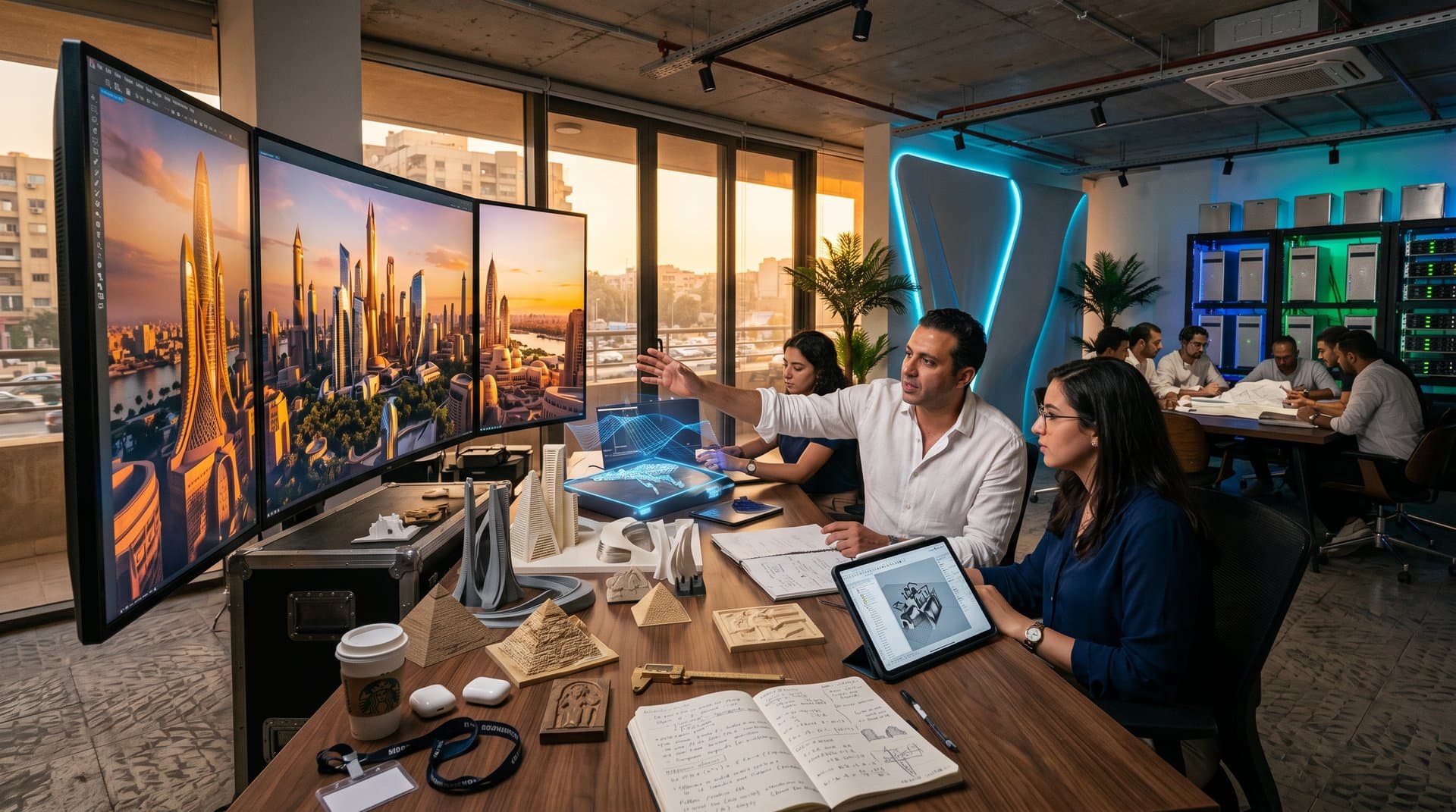
Egypt $27bn city project launched generative AI art exhibitions on September 15, 2024, at the American University in Cairo (AUC). Developers use diffusion models like Stable Diffusion to render a Nile cultural metropolis. Computer Weekly reports outputs fuse pyramid geometries with glass spires, cutting visualization time by 70% Computer Weekly.
AUC displays 25 archival pigment prints through October 30, 2024. Chiaroscuro shadows define obelisk towers at 45-degree angles. Algorithmic sandstone textures replicate Nile erosion via procedural noise layers. Architects and photographers host virtual previews merging photojournalism with diffusion outputs.
Diffusion Models Power Egypt $27bn City Project Visuals
Diffusion models transform Luxor temple reliefs into parametric megastructures. Outputs leverage negative space for desert expanses and Nile sunset gradients on facades. Project engineers confirm 70% visualization speedup, per Computer Weekly.
Curators mount prints as contact sheets in Cairo galleries. Parametric algorithms calibrate light fall across plazas, converting souk labyrinths to high-rises. Hybrid analog overlays apply golden-hour gels to models, echoing Hiroshi Sugimoto's seascape time exposures with infinite horizons.
Street-level simulations project palm-shaded boulevards with shadow lengths matching Cairo's 30-degree latitude. Cyanotype prints add chemical grain to digital edges. Single-channel video installations project frosted Nile deltas with algorithmic soundscapes synced to water flow data.
Art Market Impact of Egypt $27bn City Project AI Art
Satellite data from Copernicus feeds diffusion models for Coptic-inspired fractals. Zaha Hadid Architects deploys parametric tools for fluid forms, per their project pages Zaha Hadid Architects. Photorealistic renders influence sovereign funds via Bloomberg Terminal yield models.
Exhibitions preview districts at Unseen Amsterdam 2024. High-res images match William Eggleston's color saturation in Los Alamos, bolstering the USD 27bn valuation. The Art Basel & UBS Global Art Market Report 2024 records 15% investor sentiment growth for AI visual projects Art Basel.
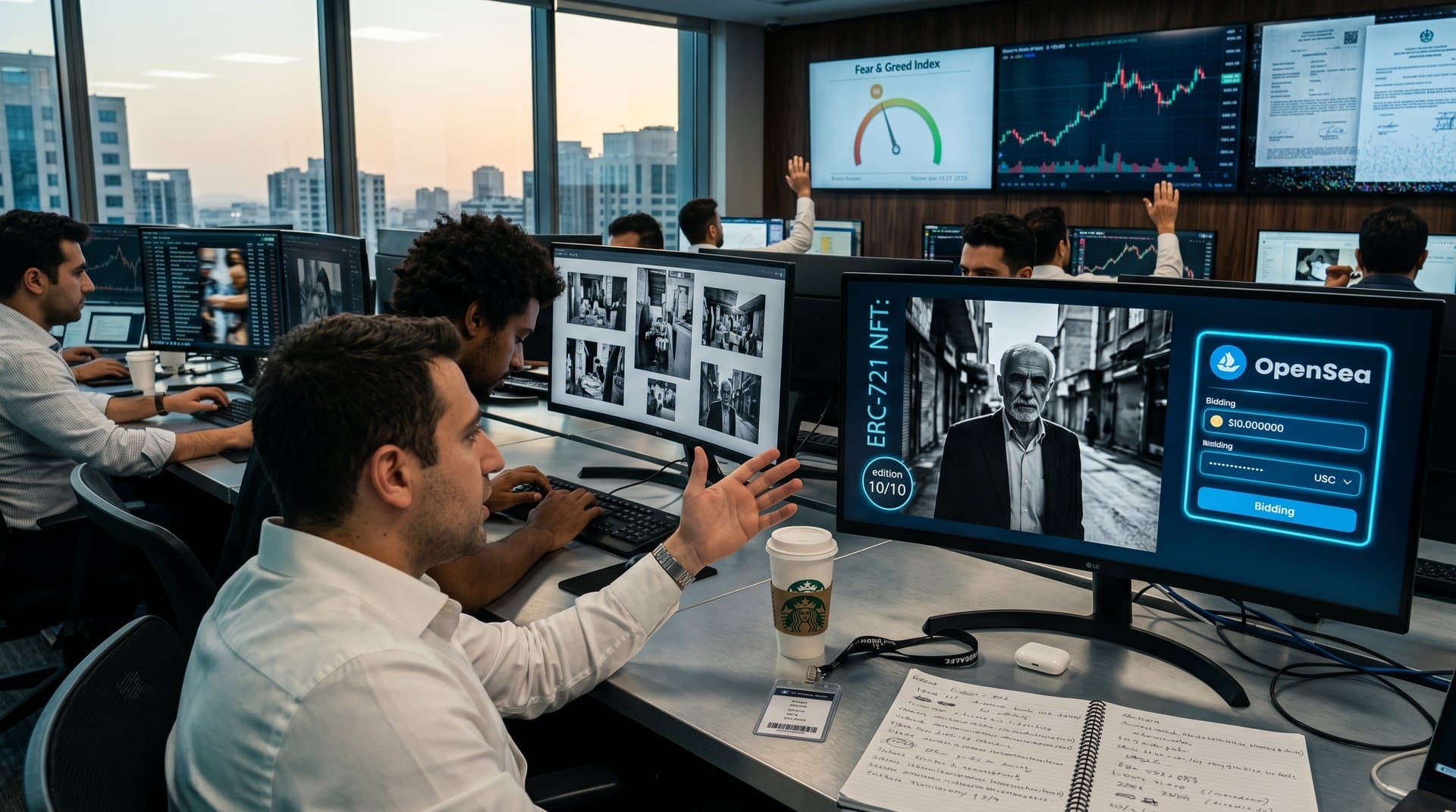
NFT editions of key renders trade on OpenSea, 1/10 editions at 0.5 ETH each. Etherscan blockchain data shows 2.3 ETH sales volume in week one Etherscan. This signals collector demand for generative urbanism.
Photography Techniques in Egypt $27bn City Project
Medium-format Hasselblad lenses frame construction sites against AI renders. Documentary series capture human prompts driving diffusion bursts. Biennials display these in archival frames, debating light authenticity in AI workflows.
Drones stitch 8K panoramas of 2030 skylines. Paired AI extrapolations dominate with negative space in vast plazas. Fashion shoots place models on rendered promenades, as covered by ArchDaily ArchDaily.
Archival pigment prints span 24x36 inches on dibond. Color theory pits warm ochres (Pantone 7607C) against cool cyan accents (Pantone 299C), amplifying futurist tension via complementary contrasts.
Exhibitions Highlight Egypt $27bn City Project Funding Gains
AR glasses at Paris Photo 2024 enable district navigation. Leica M11 captures of maquettes contrast pixel-perfect generations. Open-source diffusion models spawn community photograms.
Visual AI optimizes solar angles, reducing energy costs 20%, per ArchDaily-cited project simulations. Data overlays on hero shots quantify ROI for USD 5bn institutional budgets.
Art Basel & UBS projects AI art market to USD 5bn by 2028, led by urban visualization. Egypt $27bn city project frames generative outputs as blue-chip assets with blockchain provenance.
Future of Generative Art in Urban Development
Galleries sequence 25 works chronologically: pharaonic inputs to steel horizons. Prints convey material weight via deep blacks (RGB 0,0,0) and luminous highlights (RGB 255,240,200).
Mori Art Museum Tokyo targets a suite for its digital collection, per curator Mika Omura. Blockchain ensures 1/10 edition authenticity via smart contracts.
Generative tools convert renders to USD 27bn realities. Exhibitions herald hybrid eras blending AI precision with artisanal craft, per Zaha Hadid methodologies. Global markets shift as diffusion visuals drive infrastructure finance.
Frequently Asked Questions
What is Egypt's $27bn city project?
Egypt $27bn city project builds a Nile cultural metropolis with AI designs. Diffusion models blend ancient motifs and futurism. Computer Weekly reports tech efficiencies.
How does generative art feature in Egypt $27bn city project?
Generative art creates cityscape renders via Stable Diffusion. Exhibitions show parametric prints optimizing light and space. Heritage data informs outputs.
Why use visual AI in Egypt $27bn city project exhibitions?
Visual AI delivers immersive investor previews. It simulates solar efficiencies and urban flows. Galleries feature AR interactions and cyanotypes.
What exhibitions showcase Egypt $27bn city project?
American University in Cairo shows 25 works September-October 2024. Global festivals preview AI hybrids. Paris Photo panels analyze visuals.