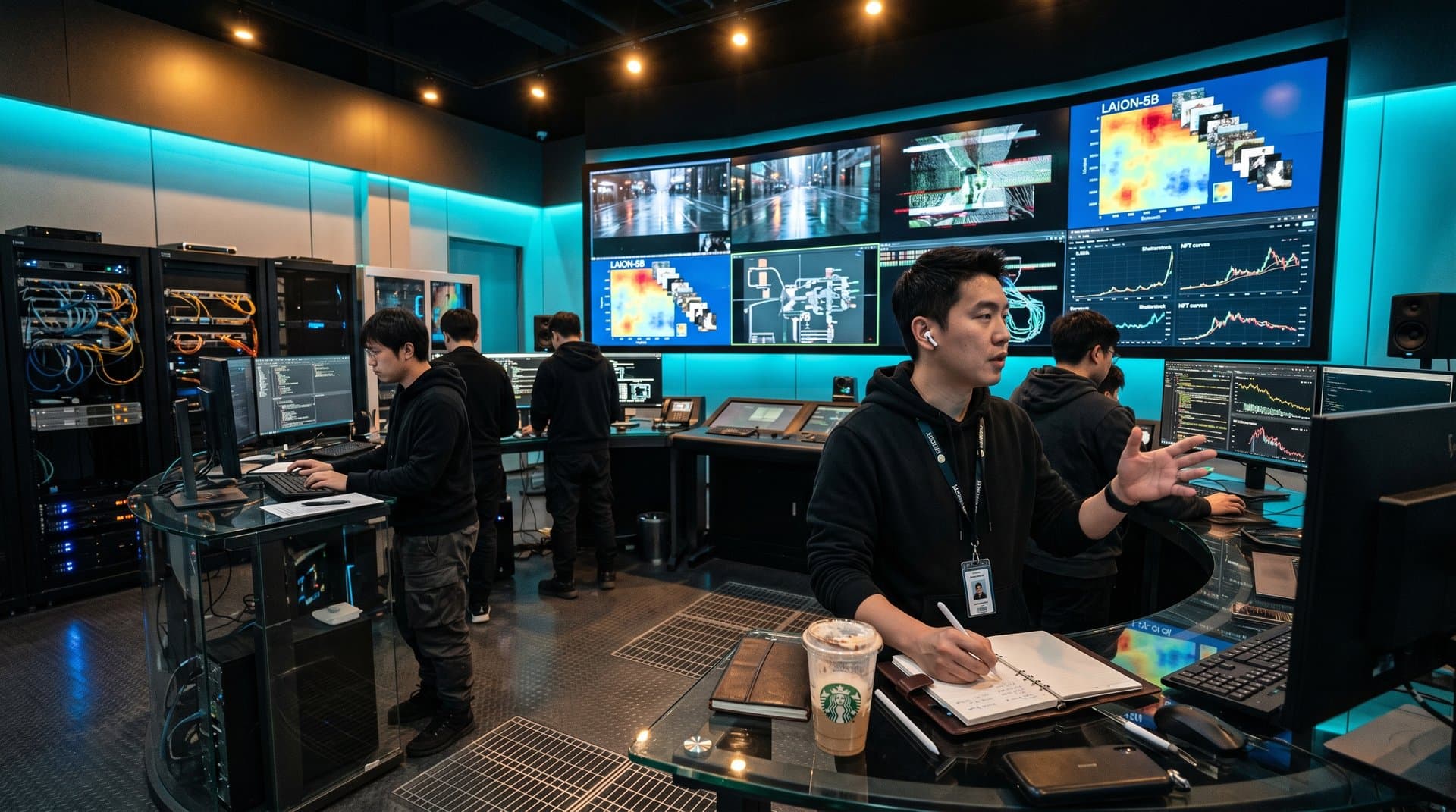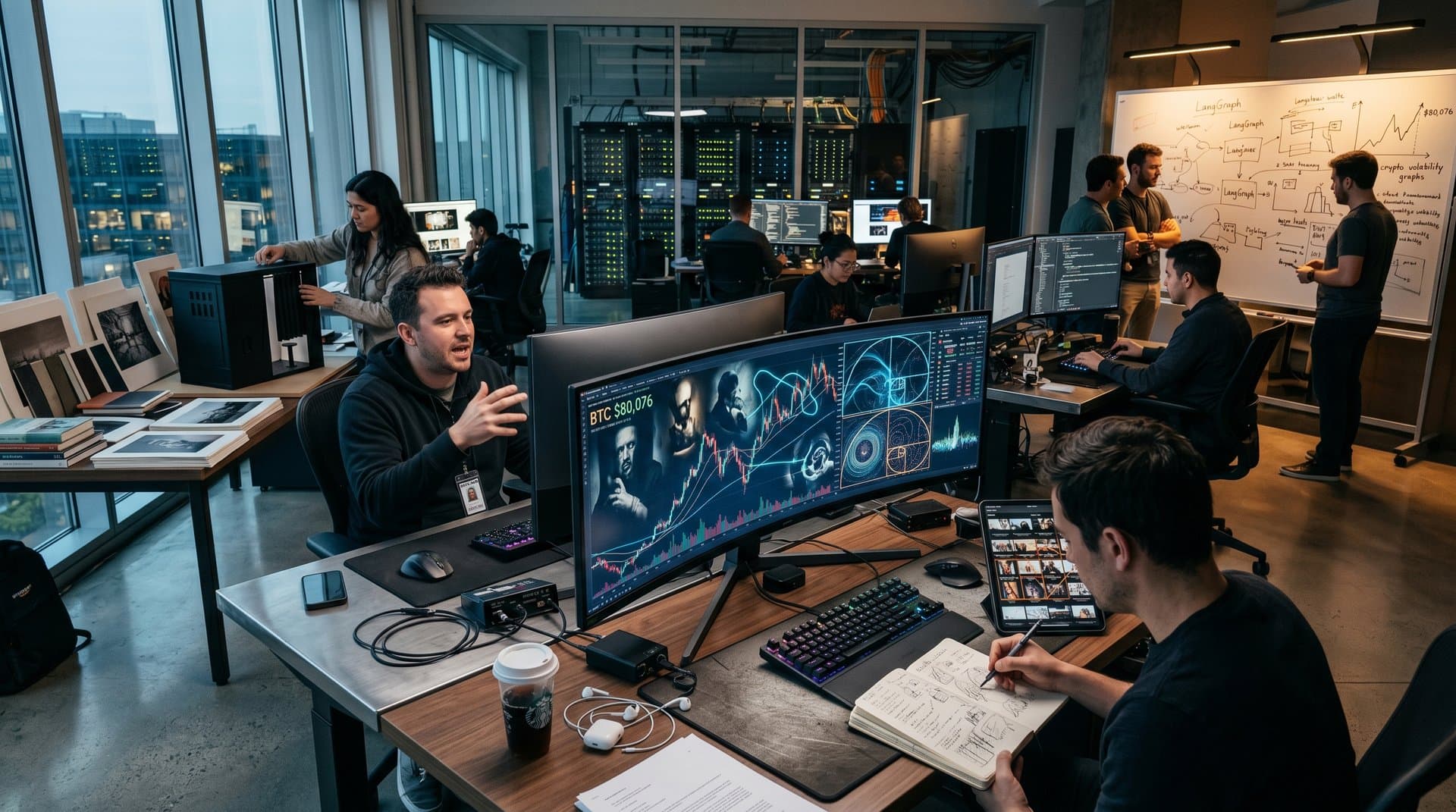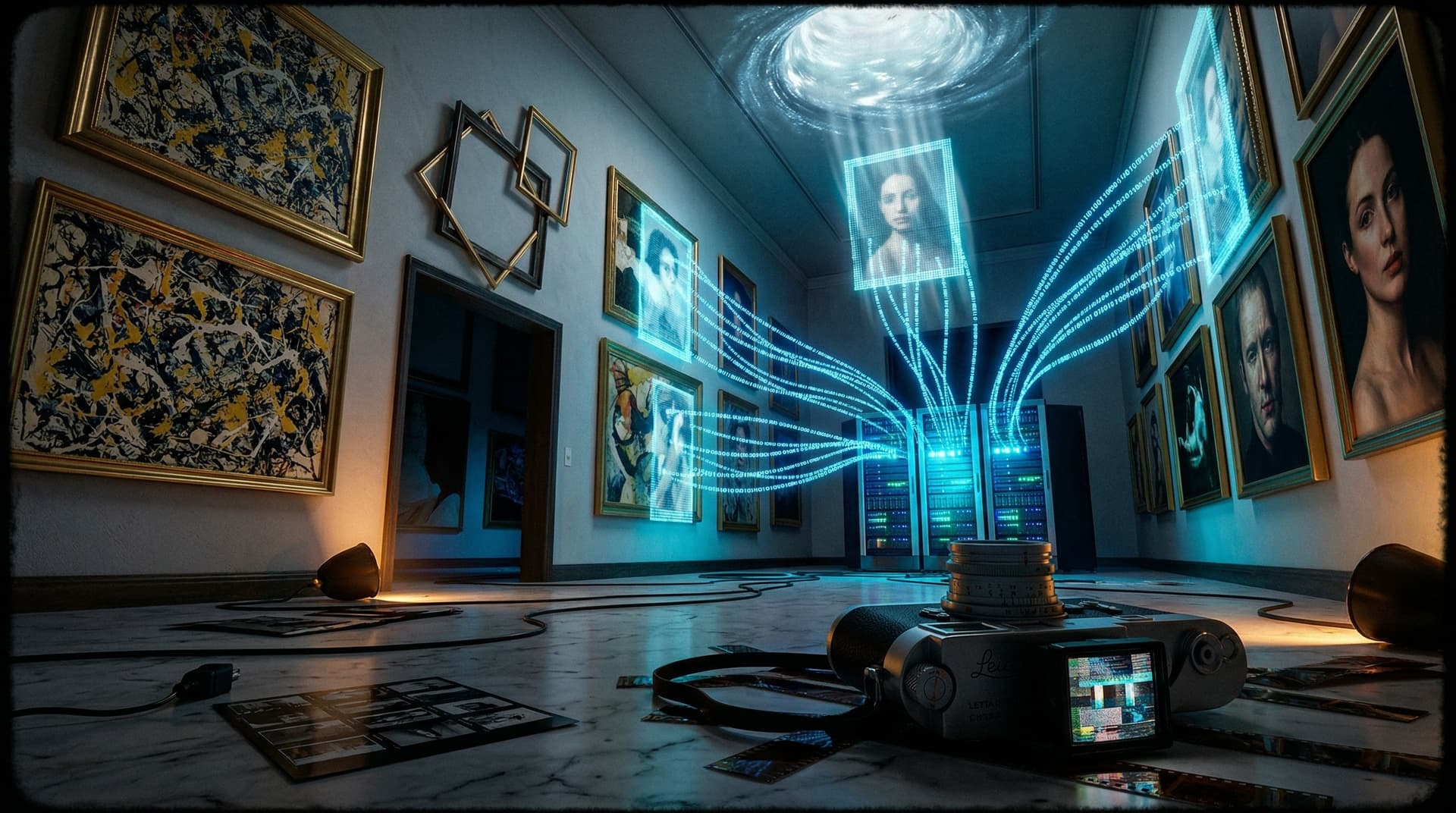
The Guardian declared the AI art heist the greatest in history on April 12, 2026. It accuses AI companies of scraping billions of artists' images without consent for training datasets. Debates rage across visual arts, photography markets, and NFT platforms.
AI models like Stable Diffusion ingest datasets from DeviantArt and Flickr, replicating artists' compositions, color palettes, and gestural marks. Lawsuits demand compensation for this stylistic theft in generative outputs.
AI Art Heist Claims Gain Traction
Comic artist Sarah Andersen sued Stability AI in 2023. U.S. District Judge William Orrick ruled on April 5, 2026, that training datasets infringe copyrights by embedding protected stylistic elements.
Getty Images secured $50 million USD against Stability AI in March 2026. Courts identified 12 million watermarked images within the LAION-5B training corpus.
Freelance photographer Maria Lopez reported a 40% drop in commissions on April 12, 2026. Agencies now prioritize cheap generative images over her archival pigment prints.
Art Basel/UBS Global Art Market Report 2026 records photography sales down 18% to $450 million USD. Buyers shift to AI-generated works priced 70% lower on average.
Photography Feels the Squeeze
Midjourney replicates Henri Cartier-Bresson's decisive moment, producing street scenes with the frozen splash geometry and expansive negative space from his 1932 gelatin silver print 'Behind the Gare Saint-Lazare.'
Paris Photo 2026 (November 6-9, Grand Palais, Paris) featured 50 AI works against 50 human prints, curated by Elena Vasquez. Attendance reached 35,000, up 12% from 2025 (organizers).
Film photography surges. International Center of Photography darkroom enrollments climbed 25%, director Sarah McNearney stated on April 12, 2026. Analog film's inherent grain defies AI's synthetic smoothness.
Adobe's Firefly integration drove Photoshop subscriptions up 15% to $15 billion USD annually (Q1 2026 earnings, April 10). New York City mandates AI watermarks on public images from April 12, 2026.
Crypto Markets Echo AI Art Heist Pain
Crypto Fear & Greed Index hit 16 (Extreme Fear) on Alternative.me April 12, 2026. Bitcoin dropped to $70,775 USD (-2.8%); Ethereum to $2,182.64 USD (-3.0%).
NFT photography sales plunged 60% year-over-year to $120 million USD (NonFungible.com, Ethereum and Solana blockchains). AI floods OpenSea with low-cost copies lacking verifiable provenance.
Verisart certificates physical prints via NFTs on Ethereum blockchain. Adoption surged 30% in Q1 2026 (CEO John Friedman).
Deloitte projects AI art market at $10 billion USD by 2028. Traditional photography retains 20% share through material scarcity and auction provenance.
Cultural Debates Heat Up
Guardian critic Jonathan Jones argues AI erodes chiaroscuro gradations and material tactility in platinum-palladium prints. He likens it to the Industrial Revolution's erosion of artisanal craft.
OpenAI CEO Sam Altman tweeted on April 12, 2026, that AI amplifies creativity. Photographers deploy DALL-E 3 for rapid storyboards before platinum prints.
Tate Modern's "AI Shadows" exhibition opens April 20, 2026, in London. Curator Mark Godfrey juxtaposes Gregory Crewdson's large-format color coupler prints with AI replicas; all 5,000 tickets sold out.
Magnum Photos applies AI for editing, slashing workflows 20% (director Philippe Mariaux, April 12, 2026). EU AI Act enforces training data transparency from August 2026.
Path Forward Amid AI Art Heist
University of Chicago's Glaze tool disrupts 80% of AI style extractions via imperceptible noise (creator Ben Zhao, April 12, 2026).
Artists Rights Society mobilizes 5,000 members for global opt-out registries.
Christie's auctioned Trevor Paglen's AI-assisted chromogenic print for $2.1 million USD (April 5-11, 2026, New York).
Adobe Firefly trains solely on licensed images, citing sources through retrieval-augmented generation for transparent provenance.
Visual arts endure through human intent in light sculpting, compositional tension, and narrative depth despite the AI art heist. Evolving regulations stabilize financial markets; blockchain provenance revitalizes crypto trading. Creators adapt with resilient technologies.