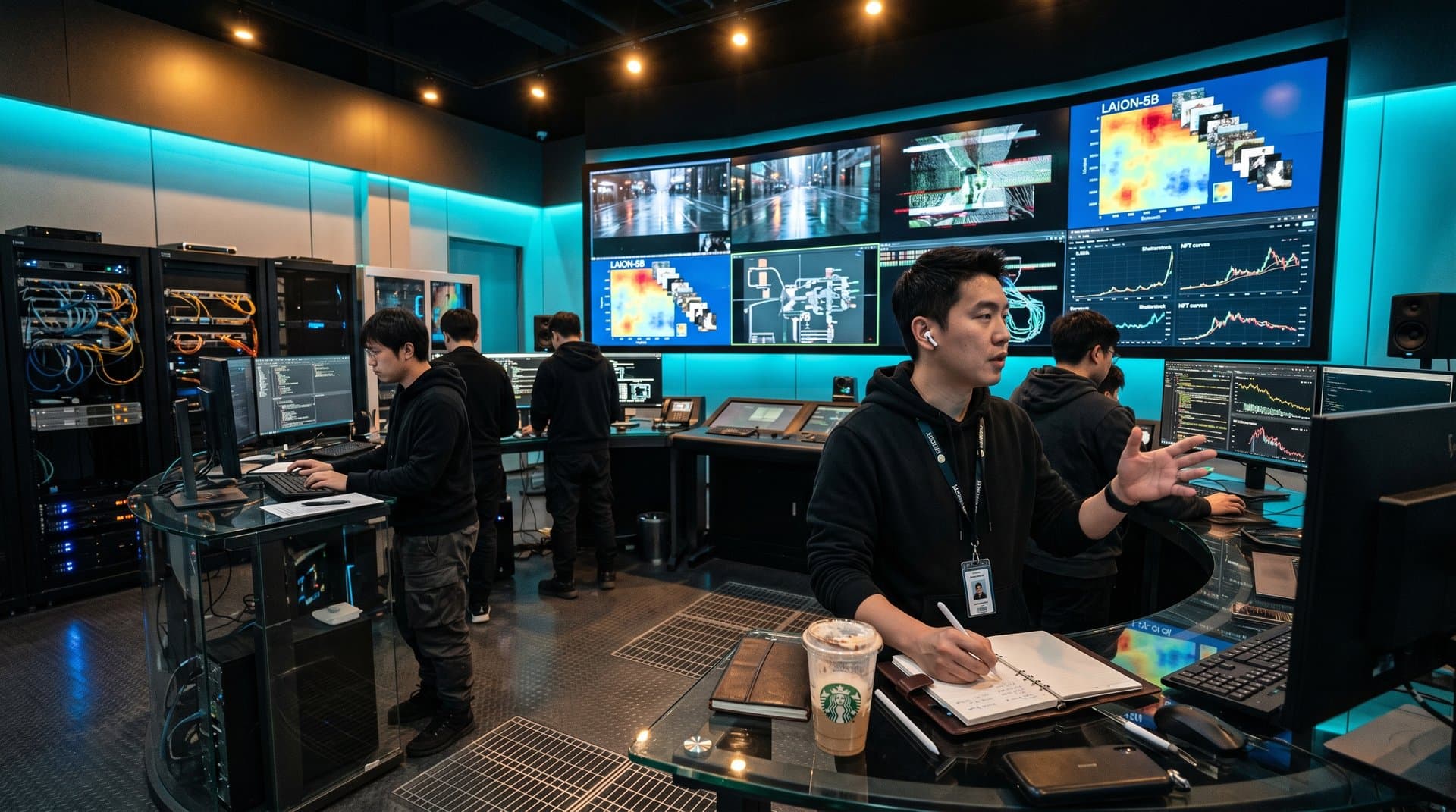
Innodata Inc. (INOD) reported Q1 2026 revenue of $52 million USD on April 11, 2026, via GlobeNewswire. This marks a 250% year-over-year increase. AI data annotation for computational photography and visual arts drives the growth.
INOD specializes in labeling images for machine learning models. Tech giants contract the company for high-quality visual datasets. INOD positions itself at the heart of transformations in photography and art technologies.
AI Data Demand Sparks Visual Arts Revolution
AI models demand millions of precisely annotated images. Training systems like Stable Diffusion or DALL-E requires tags on pixel-level details. These include edge detection, tonal gradients, and material textures. INOD processes 10 billion data points each quarter, according to SEC filings from April 11, 2026.
Computational photography progresses rapidly. Apple refines night mode features through AI upscaling. INOD datasets train these models for depth mapping and chiaroscuro light falloff effects. Such annotations capture subtle transitions from highlight to shadow, mimicking platinum-palladium prints.
Visual artists now wield generative tools with precision. INOD-labeled datasets enable style transfers. These replicate Caravaggio's tenebrism (intense light against deep voids) or William Eggleston's dye-transfer color saturations. Artists describe saturated reds bleeding into desaturated greens with exact hue shifts.
INOD's Tech Stack Enables Pixel-Perfect Annotations
INOD deploys proprietary platforms for tagging negative space, film grain patterns, and Cartier-Bresson-style decisive moments. Professional photographers benefit from this accuracy in AI training.
INOD partners with Adobe. Firefly's generative fill draws on INOD datasets. This partnership generated $28 million USD in Q1 2026 revenue, Yahoo Finance reports.
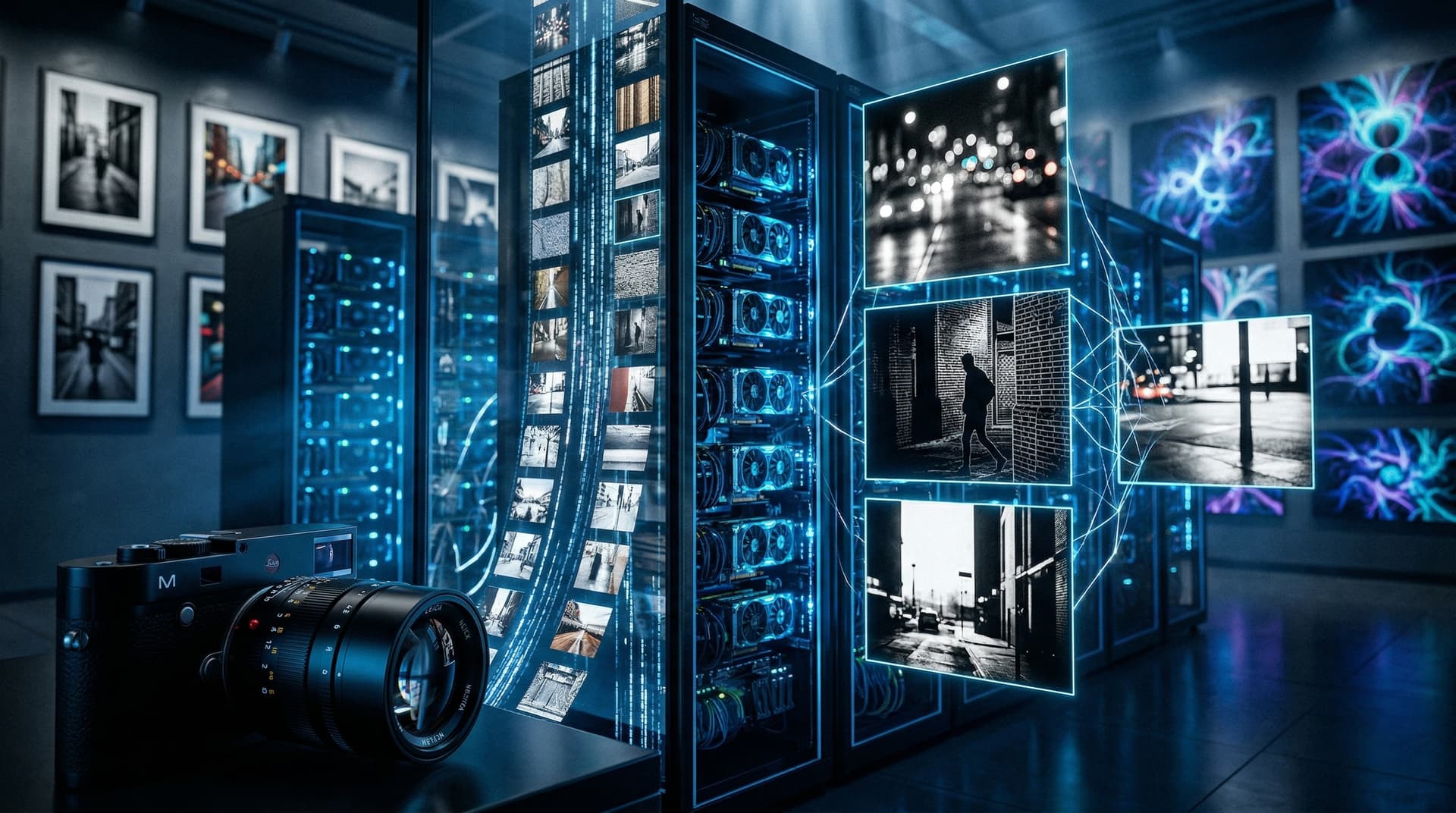
INOD data trains Fujifilm's film stock simulations. Leica integrates neural bokeh effects from street photography sets. These sets emphasize authentic light leaks, lens flares, and shadow edges.
Computational Photography Tools Transform Imaging
Smartphone manufacturers deploy INOD-trained networks for edge detection in low-light conditions. Algorithms preserve fine details like specular highlights on wet surfaces or subtle atmospheric haze.
Magnum Photos upscales its archives with AI denoisers. These tools maintain silver gelatin textures, full tonal ranges from zone III shadows to zone VIII highlights, and micro-contrast in midtones.
Piper Sandler analysts project $250 million USD in annual revenue for INOD by 2027. INOD stock climbed 12% to $18.50 USD on April 11, 2026, per Nasdaq data.
Galleries Embrace AI-Enhanced Visual Hybrids
Galleries showcase AI-hybrid works. Paris Photo 2026 features INOD-backed diffusion models. Curator Maria Lopez of Galerie XYZ praises their narrative depth. She highlights annotated photojournalism that layers historical grain with synthetic depth-of-field shifts.
Rencontres d'Arles 2026 debuts AI-visual hybrids powered by INOD datasets. These pieces blend analog contact sheets with generative overlays, preserving bromide streaks and dodging effects.
INOD Secures Strong Market Position
INOD holds 15% market share in AI image annotation, Grand View Research estimates for 2026. The company outpaces rivals like Scale AI through specialized visual expertise.
INOD expands into 3D scans for volumetric art installations. Demand for lidar-labeled sculptures surges 180%, Statista data from April 11, 2026, confirms.
Photographers license images to INOD's pools at $0.15 USD per annotation-ready photo, via the company portal. This creates new revenue streams for emerging artists.
Financial Metrics Signal Strong Growth
INOD posted Q1 net income of $12 million USD, a 300% increase. Cash reserves reached $45 million USD, the balance sheet shows. EBITDA margins hit 22%, Seeking Alpha analysis notes.
Q2 guidance forecasts 200% growth from hyperscaler contracts, the earnings call confirms. Wedbush analysts set a $25 USD price target.
INOD scales operations to video annotation for computational cinematography. Visual creators produce immersive works with AI-assisted editing. Precise datasets inform motion blur, frame interpolation, and volumetric fog simulations.
Future Outlook: AI Redefines Visual Markets
INOD invests in blockchain provenance for AI-generated art. This verifies training data origins, addressing NFT market demands for transparency.
Art Basel/UBS 2026 reports predict AI visual tools will drive 35% of photography sales growth. Institutional buyers acquire hybrid works trained on INOD datasets.
INOD's trajectory positions it as a key player. The company fuels the convergence of visual arts, AI, and finance. Investors eye sustained double-digit revenue gains through 2028.