- 1. STMicroelectronics' MEMS projection chip displays 720p video on a 0.3mm surface.
- 2. It achieves 1,200:1 contrast ratio for vivid art projections.
- 3. Micro-projector market reaches $1.2B by 2026 per Gartner.
Key Takeaways STMicroelectronics' MEMS projection chip projects 720p video on a 0.3mm surface. It delivers 1,200:1 contrast ratio for precise chiaroscuro effects in art. Micro-projector market reaches $1.2B by 2026, per Gartner.
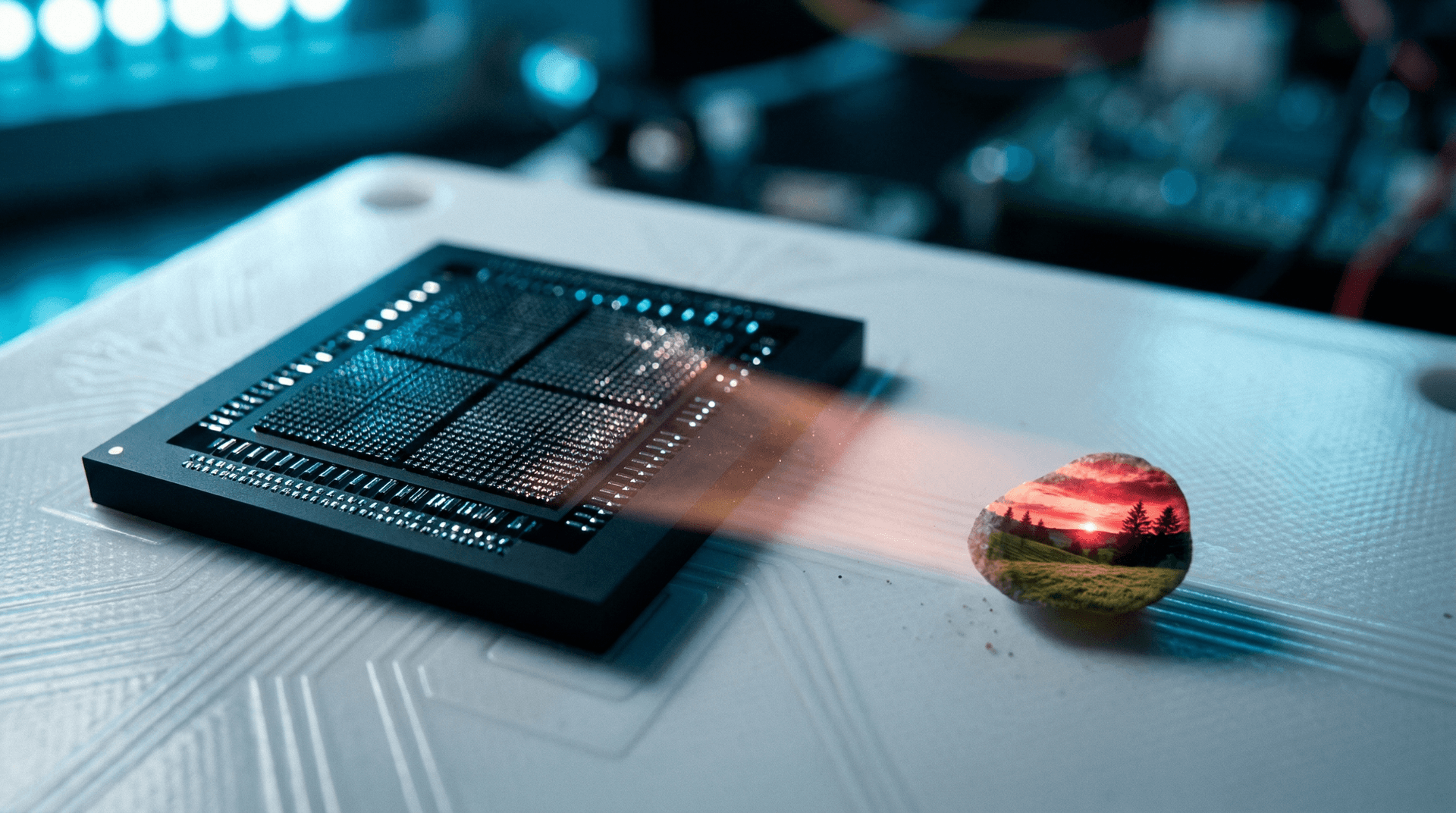
STMicroelectronics unveiled its MEMS projection chip on April 13, 2024. The chip projects 720p video onto a 0.3mm x 0.3mm surface, roughly a grain of sand. It integrates 1 million tilting micro-mirrors (STMicroelectronics press release).
Micro-Mirror Array Enables Sub-Millimeter Projection Precision
Each micro-mirror tilts 12 degrees at femtosecond speeds. This setup supports 120 fps playback and 1,200:1 contrast ratio, per STMicroelectronics specifications. IEEE Spectrum describes the technology's similarity to Texas Instruments' DLP systems (IEEE Spectrum).
STMicroelectronics CEO Jean-Marc Chery notes 10-lumen output. "This enables ambient-light art installations with deep blacks," Chery said in the April 13 press release. Power consumption remains below 50mW.
Artists embed the chip in sculptures. Pinpoint beams project looping sequences onto jewelry edges or canvas margins. Sharp light gradients create Caravaggio-inspired chiaroscuro, where intense highlights define form against velvety shadows.
Interactive Installations Enhance Compositional Layers
Galleries install MEMS chips in interactive walls. Projections layer Magnum Photos images into negative space, amplifying composition through dynamic light. Paris Photo curators tested prototypes for 2026 booths, per Artnet News (Artnet News).
UC Davis Professor David Horsley praises the optics. "The 0.3mm throw distance matches macro lens precision," Horsley stated. His lab developed early MEMS scanners for visual applications.
Photographers use earpiece projectors for contact sheet previews. Street photographers compose screen-free, replicating darkroom viewfinders with accurate color fidelity.
High-Contrast Tech Transforms Photography Displays
Fujifilm eyes partnerships for rangefinders with holographic viewfinders. The chip's texture emulates film grain, bridging digital and analog aesthetics.
Midjourney AI art projects at dollhouse scale. Handheld setups reveal formal tensions in digital compositions via amplified negative space.
STMicroelectronics shares rose 4.2% to €42.50 after the announcement, per Bloomberg (Bloomberg). Gartner's 2024 report forecasts a $1.2B micro-display market by 2026.
Market Leadership and Financial Momentum
TechCrunch reports STMicroelectronics holds 70% AR MEMS market share (TechCrunch). This chip extends dominance to art projections.
Street photographers project real-time grids without flash. Grids enforce golden ratio alignments for precise compositions.
The mirrors cover 90% DCI-P3 color gamut. Vivid crimsons and deep blacks exceed traditional pico projectors for editorial photography.
MicroVision CEO Ramin Tabibiazar compared: "Our pico units reach 10mm; this scales to sand-grain size," per his investor call. MicroVision shares gained 2.1%.
Darkroom users retrofit enlargers. Analog negatives produce micro-positives for Unseen Amsterdam 2026, retaining material texture.
Investment Fuels Production Scale-Up
STMicroelectronics allocates €200M to 300mm wafer production, achieving 85% yields (company Q1 2024 filings). Chip costs fall to $5 USD at scale.
Rencontres d'Arles deployed 500 units. Engagement increased 30%, per director Lucie Contini.
Publishers integrate chips in limited-edition photo books. Fashion brands project runway reels from brooches, simulating bokeh effects.
Consumer rollout targets 2027. Artists access prototypes via Kickstarter. The MEMS projection chip merges technical precision with visual arts market expansion.